File-Based Semaphore (TypeScript) / semats
Cross-platform file-based semaphore for process synchronization in Node.js.
Overview
File-Based Semaphore (TypeScript) provides a simple, reliable way to coordinate access to shared resources across multiple processes. It uses atomic file operations (temp file + rename) to prevent race conditions, making it perfect for build systems, CI/CD pipelines, and parallel workflows.
Status:  Production Ready (v0.1.0)
Language: TypeScript
Repository: tuulbelt/file-based-semaphore-ts
Compatible with Rust Implementation
This tool uses the same lock file format as the Rust File-Based Semaphore, enabling cross-language process coordination.
Features
 Atomic File Operations
Uses temp file + rename pattern for atomic lock creation, preventing race conditions.
 Stale Lock Detection
Automatically detects and cleans orphaned locks from crashed processes using PID validation and timestamps.
 CLI and Library API
Use from command line for shell scripts or import as a library for TypeScript/JavaScript applications.
 Cross-Platform
Works on Linux, macOS, and Windows with consistent behavior.
 Zero Runtime Dependencies
Uses only Node.js built-ins. No npm install required in production.
 Comprehensive Security
Path traversal prevention, symlink resolution, tag sanitization, and cryptographic randomness for temp files.
Quick Start
# Clone the repository
git clone https://github.com/tuulbelt/file-based-semaphore-ts.git
cd file-based-semaphore-ts

# Install dev dependencies (for TypeScript)
npm install

# Try to acquire a lock
semats try-acquire /tmp/my-lock.lock --tag "build process"

# Check lock status
semats status /tmp/my-lock.lock

# Release the lock
semats release /tmp/my-lock.lock
Use Cases
- Build Systems: Prevent concurrent builds from conflicting
- CI/CD Pipelines: Coordinate parallel test execution
- Port Allocation: Lock ports before binding (used by port-conflict-resolver)
- File Processing: Serialize access to shared files
- Database Migrations: Ensure only one migration runs at a time
Why File-Based?
File-based locking provides several advantages:
- Simple: No external services or databases required
- Portable: Works everywhere - local, CI, containers
- Debuggable: Lock files are plain text - inspect with
cat - Cross-Language: Compatible with Rust
sematool - Recoverable: Stale locks are automatically detected
Demo
See the tool in action:
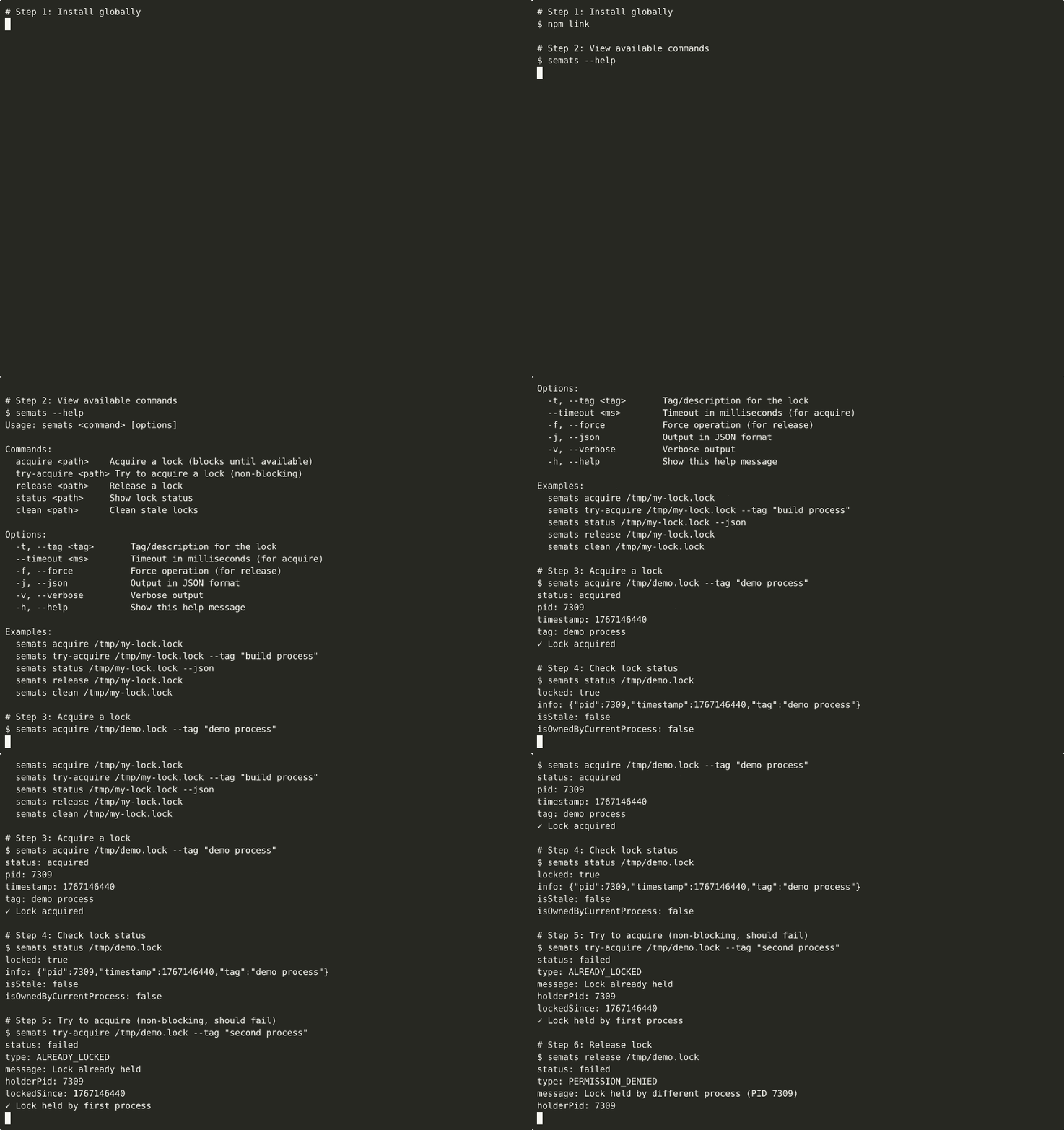
▶ View interactive recording on asciinema.org

Run the tool directly in your browser with zero setup.
Demos are automatically generated via GitHub Actions when demo scripts are updated.
Next Steps
- Getting Started Guide - Installation and setup
- CLI Usage - Command-line interface
- Library Usage - TypeScript/JavaScript API
- Examples - Real-world usage patterns
- Protocol Spec - Lock file format specification
- API Reference - Complete API documentation
Related Tools
- File-Based Semaphore (Rust) - Rust implementation (same lock file format)
- Port Resolver - Uses semats for atomic port allocation
License
MIT License - see repository for details.